

In July 2026, Oklahoma’s electric-bill debate is no longer only about summer heat. It is also about who pays when data centers, AI facilities, crypto mining loads, and other large-load customers ask OG&E, PSO, OEC, co-ops, or municipal utilities for power at a scale most homes never see.
That does not mean a data center next county over automatically raises your bill. It means the cost assignment matters. If new substations, transmission lines, generation capacity, collateral rules, and long-term contracts are handled poorly, ordinary customers can end up carrying risks they did not create.
How Large Loads Change the Grid
A home load is variable. Air conditioning peaks in August, drops overnight, and changes with weather. A data center is different. It can require large, steady power every hour because servers, cooling, network equipment, backup systems, and controls run continuously.
Oklahoma regulators are treating that difference seriously. The Oklahoma Corporation Commission’s Public Utility Division wrote in its large-load research memo that data center and AI loads often exceed 100 MW per site and raise questions about reliability, ratepayer fairness, and infrastructure planning. House Bill 2992 uses a 75 MW threshold for new large-load customers, according to the Oklahoma House update.
Those numbers are not normal neighborhood growth. At a 3 kW household peak, 75 MW equals the instantaneous demand of about 25,000 homes. That is only a rough peak-demand comparison, not an annual energy comparison, but it explains why utilities need different rules for these projects.
The Southwest Power Pool, the regional grid operator that includes Oklahoma utilities, says demand is outpacing supply as electrification and large data centers are added. Its grid challenge summary points to the need for dispatchable generation and more transmission, especially when wind and solar output are low.
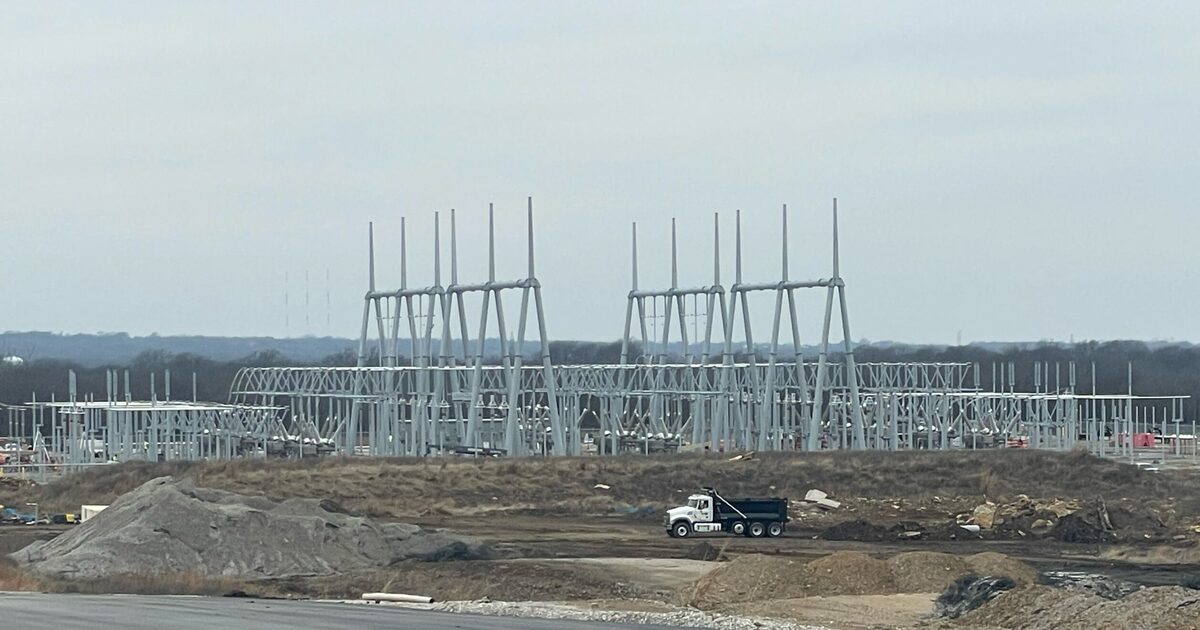
That is the core issue. A new large load can require wires, substations, generation planning, reserve capacity, and system studies before one server goes online.
What This Means for Oklahoma Homeowners
The bill impact depends on where costs land.
If a utility builds infrastructure for a large-load customer and the project cancels, downsizes, delays, or uses less power than promised, somebody still has to pay for planning and equipment already ordered. Without proper billing minimums, deposits, contract terms, and exit fees, that cost can drift toward the broader rate base.
That is why Oklahoma passed the Data Center Consumer Ratepayer Protection Act of 2026. HB 2992 tells electric suppliers and regulators to treat large-load customers differently, and it adds a 60-day notice requirement after land acquisition for projects that meet the law’s threshold. The practical intent is simple: families, farms, and small businesses should not finance private grid upgrades for giant energy users.
OG&E and PSO are now describing large-load tariffs around that idea.
OG&E’s data-center page says its proposed tariff would require large-load customers to pay connection costs, billing minimums, early termination fees, capacity-reduction fees, collateral, and long-term commitments. OG&E also says the proposal uses a 15-year term, a maximum five-year ramp-up, and a 75 MW threshold for new customers. The company estimates a $25 million to $30 million yearly residential-customer benefit if the tariff is approved and credited back through rate reviews.
PSO’s data-center page makes the same general claim from its side of the state: data center customers should pay upfront and over time, with financial guarantees and Oklahoma Corporation Commission review.
Be careful with both optimistic and alarmist claims. Large-load tariffs may protect customers, but they still need regulatory review. Data centers may help spread fixed grid costs, but only if contracts are tight and the projects actually materialize. Bills can still change for fuel costs, storms, equipment replacement, generation additions, and normal rate cases.
In other words, the answer is not “data centers are good” or “data centers are bad.” The answer is whether the tariff, contract, and docket keep the cost with the customer causing the cost.
What the Evidence Shows
A representative homeowner in Oklahoma City with a 9.6 kW roof-mounted solar system might produce roughly 13,000 to 14,500 kWh annually before shade, roof angle, inverter clipping, heat, outages, and weather variation. That system might offset 55% to 75% of household energy use if the home uses 1,500 to 2,000 kWh in heavy summer months and less in spring and fall.
That is not an Affordable Solar customer case study. It is a planning scenario.
Now compare that home-scale math with large-load planning. A single 75 MW customer is not a bigger subdivision. It is a grid-scale industrial load. It can affect transmission studies, generation reserves, substation capacity, and utility financing in ways a neighborhood of normal homes does not.
For a homeowner, solar does not make those grid questions disappear. It changes exposure.
If the home uses most of its solar production onsite during the day, it buys fewer kWh from the utility. If the home exports extra midday power under Oklahoma net billing, the value of that export depends on the utility’s tariff. If the home has battery storage, such as Tesla Powerwall, FranklinWH, EG4, or Enphase IQ Battery, it may shift more solar into evening use or protect selected circuits during an outage.
The utility bill still has pieces solar may not erase:
- customer charges
- minimum bills
- riders and fuel adjustments
- taxes and franchise fees
- demand or time-based charges if they apply
- net billing export values
- interconnection and meter rules
A 9.6 kW system that produces 14,000 kWh per year can be a strong hedge against energy charges. It is not a shield against every grid cost. That distinction matters more as Oklahoma debates large-load tariffs.
The technical side matters too. A solar-plus-storage design still has to satisfy NEC 690 for PV circuits, NEC 705 for interconnected power sources, NEC 706 for energy storage, UL 1741 or IEEE 1547 inverter requirements, utility interconnection rules, disconnect placement, rapid shutdown, labeling, and inspection. A battery does not turn a home into a private utility. It gives the homeowner more control over selected loads when the system is designed honestly.
What to Look For
Start with your utility. OG&E, PSO, OEC, co-ops, and municipal utilities do not all use the same tariffs. Ask what part of your bill changes when a rate case, fuel adjustment, rider, or large-load tariff is approved. Do not rely on one headline.
Then watch the docket language. The useful questions are specific:
- Does the large-load customer pay 100% of direct connection costs?
- Are there billing minimums if the project delays?
- Is collateral required before construction starts?
- What happens if the customer cancels or reduces load?
- Are generation and transmission costs separated from ordinary residential costs?
- Does the Oklahoma Corporation Commission review adverse impacts before costs move?
For a solar proposal, ask a different set of questions. How many kWh should the system produce in its first year? What percentage of that production will the home use onsite? How much will be exported? Which OG&E, PSO, OEC, co-op, or municipal tariff is assumed? Does the proposal model fixed charges separately from energy charges?
If battery storage is included, ask which circuits are backed up, how many kWh are usable, how much inverter output is available, and what load gets shed during an outage. A 10 kWh battery can protect refrigeration, lights, internet, and selected outlets. It should not be sold as unlimited backup for central air, electric heat, an oven, a dryer, and EV charging all at once.
The practical takeaway is boring, which is good. Track what your utility is asking regulators to approve. Read the large-load tariff summary. Check your own kWh use. Size solar around real daytime load and export rules. Treat batteries as load-management tools, not bill magic.
Oklahoma’s data-center boom may bring jobs, tax revenue, and new grid investment. It may also bring cost-shifting risk if contracts are loose. Homeowners should not panic, but they should be precise. The question for every new large load is simple: who pays if the forecast is wrong?