
EV Charger Installation
Level 2 EV Charger Installation for Oklahoma Homes
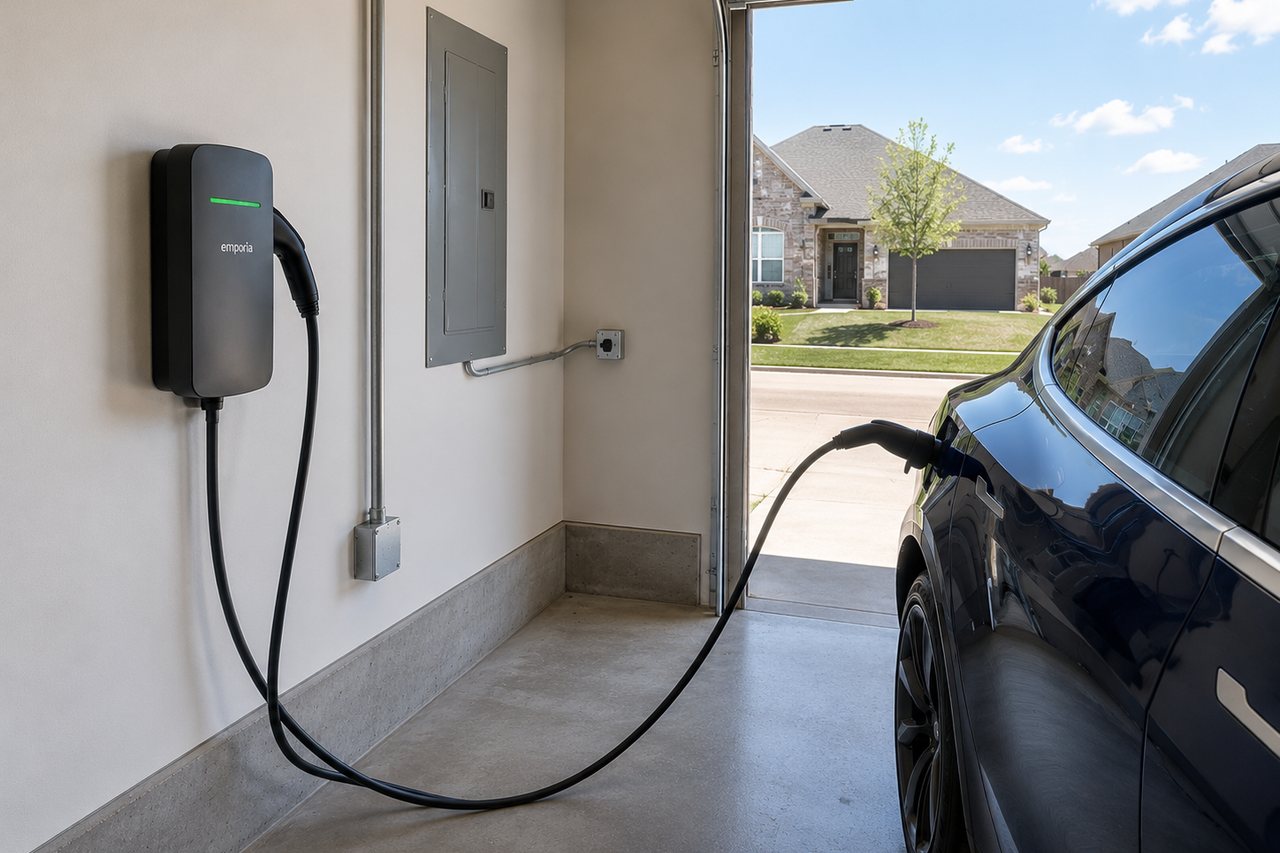
Home charging should start with the electrical plan: panel capacity, circuit path, charger location and whether solar, batteries or load management should be part of the same scope.
Home Charging
The charger is only part of the project
A Level 2 charger makes EV ownership easier, but it adds a major load to the home. The right plan starts with the panel, not the charger box.
We review the existing electrical foundation, where the vehicle parks, how the circuit can reach the charger and whether load management or a panel upgrade is needed.
If you are also considering solar, batteries or SPAN, plan the charger at the same time so the electrical work supports those upgrades.
Best-fit projects
- ✓You want a dedicated Level 2 charging circuit at home
- ✓The panel may be tight and needs load review first
- ✓You want solar, battery or SPAN planning tied to charging
What Shapes the Scope
Three things to decide before installation
A clean charger install answers the electrical questions before equipment is mounted.
Panel capacity
A Level 2 charger is a large 240V load, so the existing panel and household loads need to be reviewed before installation.
Circuit path
The charger location, wiring route, breaker space and mounting surface shape the final scope and price.
Future energy plan
Solar, batteries, SPAN and load management can change the best charger plan, especially when capacity is tight.
Solar-Ready Charging
Plan charging around the future load
EV charging can be a standalone circuit, but many homes are adding more than one energy upgrade. Solar, battery backup, heat pumps and smart panels all compete for panel capacity.
When we plan the charger, we look at what the home may add next. That helps avoid a quick install that has to be reworked when solar or backup power comes later.
If the panel is the bigger question, start with electrical panel upgrades. For the full service overview, use electrical services.
What we look at
Charger location
Garage wall, driveway access, cord reach, mounting height and daily parking pattern.
Electrical load
Existing panel size, major household loads, spare breaker space and future solar or battery plans.
Upgrade path
Dedicated circuit, panel upgrade, load management, SPAN or a phased plan that avoids rework.
Process
From charger idea to clear scope
Tell us the vehicle and parking setup
Charger model, garage or driveway location, daily parking pattern and desired charging speed shape the first plan.
Review the panel and route
We look at capacity, breaker space, route difficulty, conduit needs and whether solar or battery plans change the answer.
Choose the right charging path
The final scope may be a dedicated circuit, panel upgrade, load-management option, SPAN or phased plan.
Common Questions