

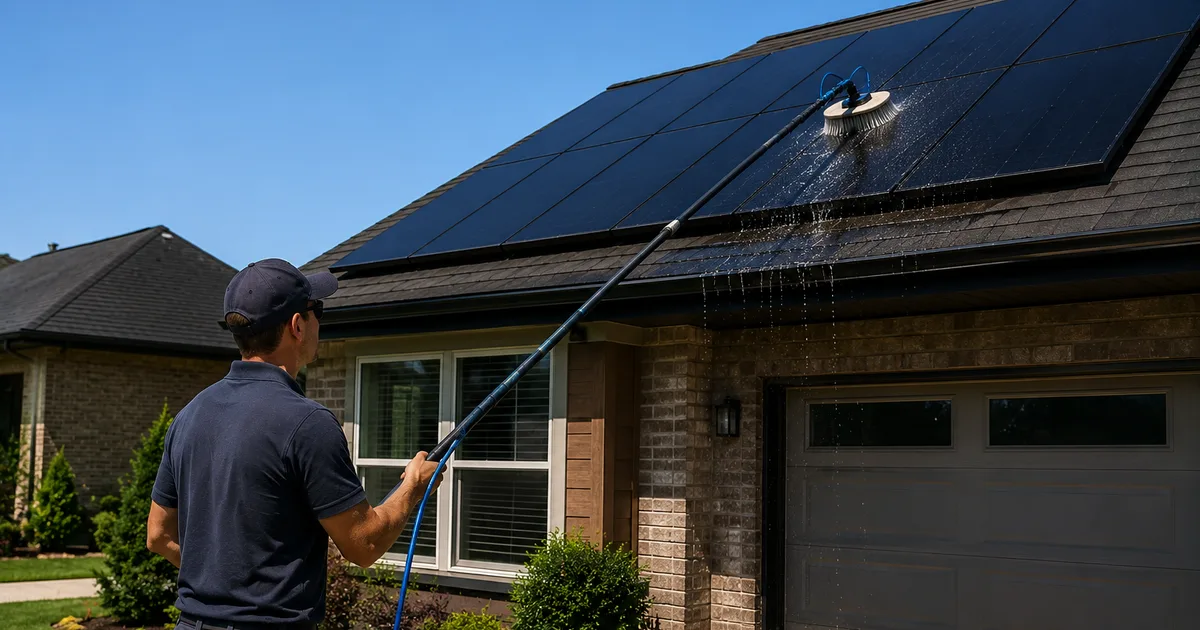
In central Oklahoma, a homeowner can check a grid-tied solar system in about 10 minutes a month if the monitoring app, inverter, and roof line are easy to see. Most solar maintenance is not dramatic. It is watching production, noticing obvious damage, keeping shade and debris from building up, and knowing when not to climb on the roof.
That matters in Oklahoma because the system has to live through spring pollen, red dirt, 100°F summer roof temperatures, hail risk, high wind, ice, and utility billing that still depends on accurate meter data. The panel glass is only one part of the system. The wiring, racking, flashing, inverter, gateway, battery, and monitoring account all need a simple maintenance rhythm.
How Solar Panel Maintenance Actually Works
Solar photovoltaic systems have no fuel to buy and no oil to change. The U.S. Department of Energy’s consumer guide says maintenance is usually minimal, with occasional cleaning for performance and inverter replacement often becoming the larger long-term item on older systems: DOE consumer solar guide.
For most Oklahoma homes, maintenance means four checks:
- production monitoring
- ground-level visual inspection
- safe cleaning only when soiling is visible
- professional inspection when alerts, damage, roof work, or electrical changes show up
Monitoring comes first. Enphase says its app can show system status, production, reports by day, week, month, and year, plus panel-level detail for systems that support it: Enphase App. That is more useful than guessing from one electric bill, especially on OG&E, PSO, OEC, co-op, or municipal accounts where weather and billing periods change month to month.
If a 9 kW system in Norman usually makes 38 to 45 kWh on clear June days, a sudden drop to 18 kWh on similar days deserves attention. It may be shade, a tripped breaker, an offline gateway, a failed microinverter, a dirty string of modules, or a utility outage event. The app does not diagnose every cause, but it tells you when the pattern changed.
Cleaning is second, and it should stay boring. NREL’s soiling research notes that dust and other deposits can reduce PV output, and that the effect depends on local climate, pollution, module angle, and rainfall: NREL soiling variability. In Oklahoma, rain handles a lot of ordinary dust. Pollen, bird droppings, ash, construction dust, or crop dust near rural properties can be different.
Use water, a soft brush or sponge, and the module maker’s instructions. SolarEdge gives the same basic advice: soft brush or sponge, mild detergent if needed, and no abrasive materials or harsh chemicals: SolarEdge maintenance guide. Do not pressure-wash panels, scrape glass with metal tools, or clean hot glass in full afternoon sun.
The electrical side is not a homeowner cleaning task. NEC 690 covers solar photovoltaic systems. NEC 705 covers interconnection with other power sources. UL 1741 listed inverters, rapid shutdown equipment, disconnects, labels, conductors, and breakers should be inspected by a qualified solar technician or electrician, not opened casually after a storm.
What This Means for Oklahoma Homeowners
Oklahoma maintenance is seasonal. A Norman, Moore, Edmond, or Oklahoma City homeowner does not need a complicated checklist, but the timing matters.
In late spring, look for pollen film, seed pods, leaves, bird droppings, and storm debris. From the ground, check whether branches have grown into the solar window between about 9 a.m. and 3 p.m. Shade on one part of an array can reduce output across the affected panel or string, depending on whether the system uses Enphase microinverters, SolarEdge module-level electronics, APsystems microinverters, or a central string inverter.
In summer, watch heat and production together. Solar modules are tested at standard test conditions, but Oklahoma roofs can run far hotter than 77°F. A hot July day can produce less than a cooler clear day even when the sky looks perfect. That is normal thermal derating, not always a maintenance problem.
After hail or high wind, inspect from the ground first. Do not climb on wet roofing or walk near energized solar equipment. Look for cracked glass, shifted module rows, loose conduit, lifted flashing, missing labels, exposed wire, damaged critter guard, or racking that no longer looks straight. Panels that meet IEC 61215 hail testing are built for impact resistance, but no rating makes a roof immune to every Oklahoma storm.
After roof work, solar maintenance becomes more serious. A detach and reset should not reuse old flashed mounts without review. IronRidge, Unirac, QuickBOLT, and other racking systems depend on correct flashing, sealant, torque, rail alignment, wire management, and roof attachment spacing. A roof crew that removes panels without solar documentation can create leaks, ground faults, broken connectors, or code problems.
Battery systems add another layer. If the home has EG4, Tesla Powerwall, FranklinWH, Enphase IQ Battery, or another storage system, check the app for state of charge, backup reserve, error alerts, and whether the system actually transfers during an outage test. Battery cabinets, clearances, labels, and disconnects should stay accessible.
What the Evidence Shows
A representative Cleveland County home with a 9.6 kW roof-mounted system might produce about 13,000 to 14,500 kWh in a typical year, depending on roof pitch, azimuth, shade, module temperature, and inverter clipping. That estimate is not a customer case study. It is a planning range for a central Oklahoma home with mostly south-facing modules and limited shade.
Now add ordinary maintenance conditions:
- spring pollen film lowers a few weeks of output until rain or cleaning clears it
- one growing tree shades the lower west row after 4 p.m.
- a gateway loses Wi-Fi for 12 days, hiding a production alert
- a hailstorm leaves no broken glass, but shifts a conduit strap
- roof replacement requires a full detach and reset
None of those items means the solar array failed. They are normal ownership events. The difference is whether the homeowner catches them early.
For example, a 9.6 kW Enphase system with panel-level monitoring may show one module producing 40% less than nearby modules on clear days. If the module is dirty, cleaning may fix it. If the same panel remains low after cleaning, the next checks are shade, connector condition, microinverter status, and roof wiring. That is a service visit, not a reason to replace the system.
A string inverter system reads differently. A SolarEdge inverter may show module-level detail when the monitoring account is set up correctly, but an older central inverter may only show total array output. In that case, the homeowner should compare monthly kWh against expected seasonal production and call for service when a clear pattern is off by 15% to 25% after weather and shade are accounted for.
Soiling is real, but it is site-specific. NREL notes that soiling losses can be low in rainy climates and much higher in dry, dusty regions. Oklahoma sits in the middle. Rain helps, but red dirt, gravel roads, nearby construction, agriculture, pollen, and bird activity can make one roof need cleaning while another nearby roof does not.
What to Look For
Start with the app. Once a month, confirm that the system is online and producing. Save one clear-day production number each season. You do not need a spreadsheet. A note with “June clear day, 42 kWh” gives you a reference point later.
Then inspect from the ground:
- panels look intact and aligned
- no branches shade the array during solar hours
- no leaves, nests, or debris collect under the lower edge
- conduit is attached
- labels and disconnects are still visible
- the meter and inverter area are accessible
Clean only when there is something worth cleaning. Early morning is better than a hot afternoon because the glass is cooler. Use low-pressure water and a soft non-abrasive tool. If the roof is steep, high, slick, or near a service drop, hire the cleaning out.
Call a solar technician when the app shows a persistent alert, production drops without a weather explanation, breakers trip repeatedly, panels or racking move after a storm, roofers have touched the array, or the inverter shows an error code. Call an electrician or the installer before opening any electrical enclosure.
Ask these questions during a professional inspection:
- Are all modules producing within a normal range?
- Is the monitoring gateway online and assigned to the homeowner?
- Are roof penetrations, flashing, rails, clamps, and wire clips intact?
- Are rapid shutdown labels, AC disconnect labels, and warning placards still readable?
- Are conductors supported and protected from roof abrasion?
- Are inverter, combiner, and battery clearances still code-compliant?
- Are OG&E, PSO, OEC, or co-op meter readings consistent with production data?
The best maintenance plan is not more equipment. It is a simple habit. Watch the production, look at the roof from the ground, clean gently only when needed, and get qualified help when the issue involves wiring, racking, batteries, roof penetrations, or utility interconnection.
That is enough for most Oklahoma homeowners. Solar maintenance should protect the system without turning ownership into another weekend chore.